- Bothell, Washington
- contact@commercialcleaningbothell.com



Need any help?
(425) 678-2035
A cleaning task can be straightforward while getting to it is complicated. In a shared Seattle building, the route may pass through reception, controlled doors, lifts, or another tenant’s common space. A clear access plan protects people and information while reducing missed work and unnecessary interruptions.
Define the boundary of the task
Mark which areas belong to the tenant’s plan and which are managed by the building. Include reception, corridors, restrooms, waste rooms, and loading areas where relevant. Do not assume that permission to enter one office extends to every shared room on the floor.
Identify restricted storage, confidential work areas, sensitive equipment, and spaces that require an escort. Record exceptions in a form that authorized people can use without exposing unnecessary security information.
Name an access owner and backup
Choose the person who can confirm entry arrangements, respond to a failed access attempt, and approve changes. Add a backup for absences. A general instruction to “ask reception” may fail when reception has closed or staff have changed.
Keep personal phone numbers, codes, and access instructions in an appropriately controlled system. A cleaning checklist displayed publicly should not reveal alarm details or how to enter a secured suite.
Separate permission from convenience
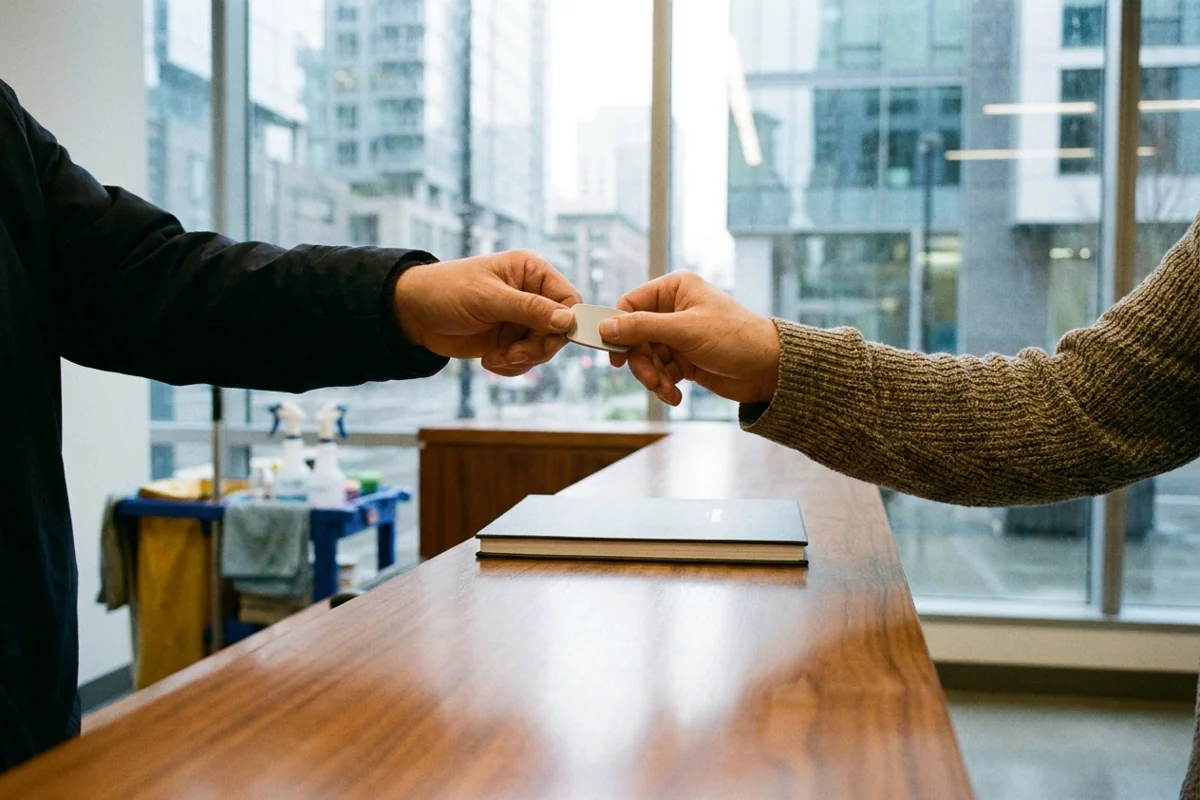
An open door is not an authorization to enter. Likewise, a colleague’s suggestion to borrow a fob does not replace the building’s process. Follow the agreed rules for issuing, returning, storing, and reporting lost access devices.
- Confirm permitted work windows and escort requirements.
- Check alarm and lock responsibilities without sharing codes openly.
- Identify approved lift and loading arrangements.
- Agree on waste-room access and collection boundaries.
- Record how an inaccessible area is reported.
- Confirm the secure exit and handover procedure.
Do not photograph security systems, confidential desks, or access credentials merely to demonstrate that work was attempted.
Plan for occupied and unavailable rooms
Meetings, late work, and hybrid attendance can change room availability. Agree on whether staff should return later, skip a room with an exception note, or contact the nominated person. Avoid interrupting a confidential meeting to obtain a cleaning signature.
A room that could not be entered should not be marked complete. Record the area, time, reason, and follow-up route without blaming an individual or including private details.
Keep equipment routes safe
Consider cable routes, cleaning trolleys, doors, and temporary closures. Equipment must not block exits or force people into an unsafe path. OSHA’s walking-working-surfaces overview provides context for managing slip and trip hazards during normal workplace activity.
If the planned route becomes unsafe or unavailable, stop and seek an approved alternative. Do not improvise through another tenant’s secured area.
Review after any building change
Update the plan when tenants move, locks change, reception hours shift, or a refurbishment alters access. A brief controlled handover is more useful than an old instruction sheet that everyone assumes is still correct. The shared-area planning notes provide a framework for clarifying responsibilities.
Recent Post

How to Prepare Seattle Office Windows for Shorter Winter Days
October 28, 2026
How to Manage Cleaning Access in a Shared Seattle Building
October 28, 2026