- Bothell, Washington
- contact@commercialcleaningbothell.com



Need any help?
(425) 678-2035
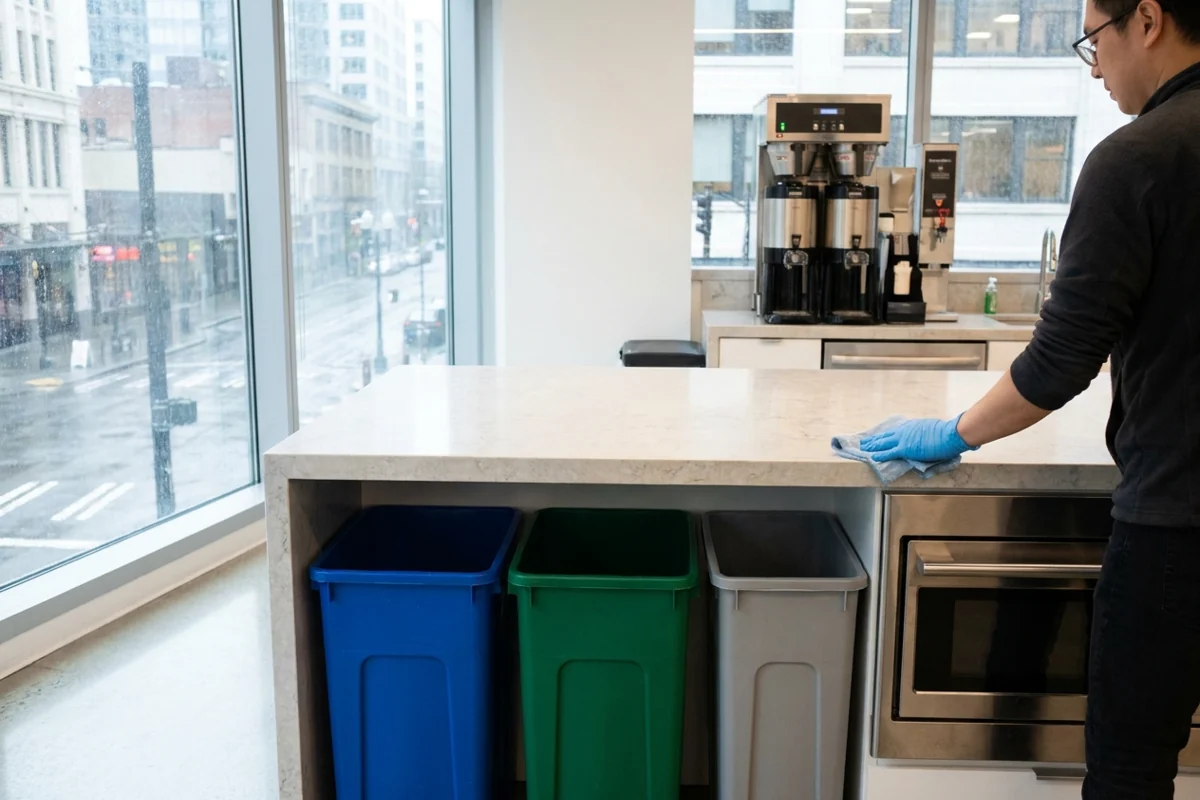
The most frequently handled parts of an office kitchen are often small: a refrigerator handle, microwave controls, a coffee-machine button, or the lid of a waste container. A Seattle office can keep the main table looking tidy while these surfaces collect residue throughout the day. Build the routine around touchpoints as well as visible spills.
Walk through a normal lunch break
List what people touch before eating, while preparing a drink, and when clearing up. Include cupboard handles, appliance exteriors, taps, counter edges, and shared seating where relevant. Do not assume every appliance or food-contact surface falls within the same task.
The CDC’s facility guidance recommends regular attention to high-touch surfaces and product selection based on the material. Healthcare and other regulated settings may have different requirements.
Separate cleaning zones and tools
Keep kitchen cloths and tools separate from restroom equipment. Use clean replacements as they collect soil, and establish how reusable textiles are laundered and dried. A color system helps only when staff understand it and the correct cloths are actually available.
Remove food and protect personal items before starting. Do not wipe crumbs directly into appliance vents, floor joints, or an open electrical outlet. Clean reachable surfaces without dismantling equipment or disturbing food-storage arrangements.
Follow appliance and product instructions
Microwave controls, refrigerator seals, coffee equipment, and countertop finishes may need different methods. Do not spray liquid directly into control panels or openings. Follow the manufacturer’s directions for any electrical isolation and interior maintenance.
For a food-contact surface, check the product’s permitted use and rinse instructions. A label suitable for one hard surface is not a blanket approval for every kitchen task. Never mix chemicals or use an improvised concentration.
Make waste sorting part of the closing check
Seattle has specific requirements for keeping food waste and recyclables out of garbage. Seattle Public Utilities’ food-waste guidance explains the requirements and links to item-specific help.
- Keep the building’s approved sorting labels visible.
- Check the correct stream for cups, packaging, and liners.
- Empty containers according to use and collection arrangements.
- Clean residue from container exteriors and the area beneath them.
- Dry cleaned bins before fitting suitable liners.
Do not assume that a product marked “compostable” is accepted in every situation. Check current local guidance and the building’s collection process when uncertain.
Agree on a fair division of responsibility
Employees can manage personal food, wipe an immediate small spill using the approved process, and clear their belongings. The cleaning plan should specify shared surfaces, accessible appliance areas, waste handling, and supply responsibilities. Building management should receive reports about leaks, damaged fittings, or persistent odors.
Review the routine after heavily attended meetings or a change in office occupancy. Use the breakroom planning notes to keep touchpoint cleaning, appliance care, and food ownership clearly separated.
Recent Post

How to Prepare Seattle Office Windows for Shorter Winter Days
October 28, 2026
How to Manage Cleaning Access in a Shared Seattle Building
October 28, 2026